dinengdeng, glorious dinengdeng!

I'm a typical Ilokano who can't live without dinengdeng, come share my passion...

various authentic, exotic, ilokano pinakbets

Concoction or variations of this kind of exotic Ilokano dish, of this ever ubiquitous vegetable stew...

sinanglaw? paksiw? which?

What do you prefer, Vigan-sinanglaw or Laoag-paksiw? What about pinapaitan and singkutsar?

unnok/ginukan, freshwater shellfish

Want some unnok soup or ginukan bugguong?

baradibud a tugi, lesser yam vegetable stew

Tugi, for some, is only meant to be boiled and eaten simply as is. But for me, it's an indispensable ingredient for yet another hearty Ilokano dish...

1/09/2019

dinengdeng a kudet (kuditdit) ken paria, bracket fungus with bittermelon

You know it's kuditdit season when it rains and you see them sprouting white on dried twigs and branches and trunks of fallen (dead) trees (like mango and/or tamarind). And when you see them plenty but rarely and expensive in the market or being hawked upon by enterprising ambulant vendors house-to-house.


As per Ilokano way, kuditdit is always best paired with bitter veggies and paria tops it. And so with my bountiful harvest of this wonderful fungus, I'll have the venerable bittermelon as its partner. Here, indulge with me in this yet another gustatory experience, nay, an adventure if you may.

And so, this is it, pancit, the kuditdit:

And these are here parias in the mix:


Have washed and rinsed the kuditdit throughly, and the paria cut accordingly (thinly sliced "widthwise"):


Here is the finished product so to speak. I don't have the step-by-step photographs because it's a simple dinengdeng process any Ilokano can do. Just boil water first and add/dilute bugguong juice, put in some slice of onions for an added aroma. If available around, add in some sagpaw (add-on, any broiled or fried fish or meat will do, dried fish and shrimps are great, too). Here, I added grilled native chicken meat. Boil the sagpaw for some time, then add the kuditdit. Boil for some minutes to tenderize it and for its natural essences to ooze out and blend with the broth. And then the paria. Do not overcook, and do not undercook, the paria so as to moderate its bitterness.

The end result is just so comforting and refreshing!

Bitterness and mushroomy flavor blending with bugguong and the grilled meat, it's a gorgeous concoction you can't refuse to taste even if you may not that comfortable with bitter food: 

This one dish so tempting for you to have second and more helpings of steamed rice:

Come. let's eat, please, I'm hungrier by the minute!


:::::

More dinengdengs:


~~~~~

10/05/2016

tinenneb a buntiek, broiled mudfish sour soup

Tinenneb a buntiek (attasi)
When it comes to food, regionally and hence, culturally, Ilokanos love bitter foods, just as the Tagalog prefer sour ones (the famous sigang or sinigang comes to mind). But of course, we Ilokanos also love sour and sourness. We even have our own concoction and fermentation of vinegar--the famous suka Iloko or sugarcane vinegar which goes with our basi wine making industry (when our old folks make basi, they also make suka, inevitably and not only when a basi fails to ferment into wine but turn sour and instead becomes a fine suka).

And so, the Ilokano, too, has some sour dishes to serve. We have sour/soured soup like the famous paksiw of Ilocos Norte and sinanglaw of Ilocos Sur, boiled beef and innards soured with suka Iloko or with tamarind (young pods and/or the flower and shoots) or with pias (kamias). Sometimes, the Ilokano pinapaitan (way different from the maasim na papaitan of the Tagalogs which is not mapait at all but all asim), bitter as it is, is also mildly moderated with souring agents like suka Iloko or pias and salamagi. And yessir, we love sinigang, too, and we have our own version of it, simply called inalseman.

And then, we have the simpliest of simple tinenneb (also called inalseman or sinalamagian [in our place, we call it nadanuman a tinaltal a salamagi [just plain crushed tamarind with water flavored with salt and a pinch of umami (MSG)] bacause we make it even without the obligatory broiled fish]).


Simple because preparing it is not that complicated. All you need is fish, broiled (although of course, mudfish is most preferred [the smaller or medium-sized ones], and especially the ar-aro fish which by the way is becoming a rare species nowadays; paltat (catfish) is also used, and even tilapia, but the tastiest for this soup dish is buntiek/dalag/attasi and ar-aro).


And of course, young tamarind pods, and optionally, some onions (young ones with leaves would be perfect) for an added zing, and optionally according to preference, chili, for an spicy soup.

And of course, water, hot water (could also be cold water, but it should be hot so that it goes well with the tenneb process to be true to its very name--it's like panagtenneb iti mapanday a buneng, the forging of a blade, the tempering and quenching of the hot metal using water to cool it and thus hardening the blade).

And salt to taste, of course.

You crush the tamarind to render its juice and sourness (do not crush the seeds, though), you flake the broiled fish into pieces. Put these in a bowl and then pour into it hot water. Season with salt. Put in chopped onions. The hot water will "cook" the soup. And it's done!


The soup is heavenly, its sourness is so deliciously insane, all the more enhanced by the fragrance and umami-ness of the broiled fish. Spike it with fresh chilis and help yourself savoring more of this perfect Ilokano sour soup.


:::::


4/14/2015

dinengdeng/baradibud a kamangeg, samsamping, parda ken kabatiti; wild yam with blue pea, hyacinth bean and sponge gourd

Samsamping, parda ken kabatiti a nabaradibudan iti bagas ti kamangeg.
Yet another rare chance, opportunity, if you will, to find something like these wild bounty of the land right in a local market in the city--yessir, that's the rare wild yam kamangeg (Dioscorea luzonensis), a one of a kind edible tuber that grows wild just in the wild "deeply embedded in hardened soil in forested and mountainous areas" in the Ilocos; and to top it, there's another wild vegetable that yet again just grows wildly: samsamping (Clitoria ternatea Linn; in some areas it is called kalumpagi; blue pea in English).

I always see a yet another delicious starchy dinengdeng called buridibud when I see kamangeg, So this is yet another opportunity to make one, what with the perfect willd veggie fruit of a samsamping to pair it.


Luckily, I also got another so-called "native" Ilokano vegetable fruit: parda (Dolichos lablab Linn; hyacinth bean) which is just so good a pair for my buridibud.


So, there, this parda:

And the samsamping:


I also got the smaller and sweter native kabatiti (sponge gourd; not photographed) as another veggie fruit for that perfect buridibud. Together they will grace my platefuls of steamed rice. But first things first, I boiled some bugguong in a minimal amount of water, with some slices of onions for aroma and flavor. Afterwhich I simmered into the bubbling bugguong mixture the cut kamangeg, let it cook for about 20-30 minutes and then into it the kabatiti, samsamping and parda. Here it is, stewing and becoming thick and starchy:


And here's it, done! The broth is just as rich and thick and so flavorful and deliciously starchy and sweet. The fruit veggies are just cooked right not overcooked, to retain it's gorgeous color and crispness:


A really simple and easy dish but so good and healthy. Just plain dinengdeng/buridibud without sagpaws or add-ons to really savor the veggies and the rare kamangeg. Absolutely amazing Ilokano food!


:::::


2/21/2015

ginisa a kamatis ken lasona iti bugguong, sautéd tomato and onions in bugguong

Besides having kamatis as a perfect kilawen, that is the Ilokano way, being the "K" in the famous "KBL" or Ilokano's own version of the Mexican salsa, raw kamatis with bugguong and lasona (preferably the small, "native" Ilocos variety ones), well, tomato is also preferred and prepared in various ways, raw or cooked.

One of my favorites being that of the ginisa a kamatis. And of course, and still, together, with its loyal pair: bugguong & lasona. When I say bugguong, I equally consider both nabugguong a lames (salted fish/fish fermented in salt) and nabugguong nga aramang (salted shrimp paste). Fish and shrimp. For bugguong nga aramang (which by the way defines the Tagalog pakbet), it's also perfect for KBLs especially with young lasona with sweet and tender stems and leaves. I usually buy only bugguong-aramang for this purpose, and for my ginisa a kamatis.

Naigisa a kamatis ken lasona, with bugguong nga aramang.

Making this kind of appetizer dish is just so simple and easy. You sauté in oil some garlic and the lasona of course, brown and caramelize it (optionally, you can add some ginger). Then put in the bugguong-aramang (or the bugguong-lames juice if it is so), put in just a little amount of it to moderate saltiness (you can add more later to taste if the saltiness is enough for you). Stir-fry quickly and evenly, the unbearable aroma of its being bugguong will surely be so intimidating, demanding, right now as you stir it up, making you hungrier. Then add the sliced tomatoes. stir quickly and evenly, then simmer a bit. Add a pinch of sugar if you prefer, or some teaspoonfuls of tomato sauce and/or tomato catsup, optionally, to thicken it. Add some cracked peppercorns or spice it with a dash of chili powder. Do not overcook it or it becomes overly soggy and soupy and inconsistently sour. Some prefer it with more broth and add water to cook. I like it with minimal and thick sauce-like broth. Your ginisa a kamatis will be soupy if you don't remove the seeds. Removing of the seeds is optional for you, as varieties of tomatoes vary, some has watery seeds. I remove the seeds as necessary, if it's too watery.

When done, the end result would be as lovely as this:


Absolutely gorgeous! as Jamie Oliver would have to exclaim if he himself have ever tasted, and cooked, this thing of gastronomic beauty:

The fusion of saltiness, sourness, sweetness, great flavor and aroma, is a real bliss and blessing as you consume your steamed rice and main dishes with it.

Another ginisa a kamatis, no young lasonas this time, and it's equally good and delicious:


:::::


2/19/2015

saluyot & buntiek, soured saluyot stew with grilled mudfish

I usually cook saluyot solo and the usual Ilokano way: napaksiw, napakbet, tinimtiman, inalseman. Whatever you may call it, it's the same: soured, with either plain vinegar or with souring agents such as sour fruits like pias, kalamansi or dalayap juice, green mango, young tamarind (fruit and/or leaves) and even with lubeg fruit. But for me, the best alsem to cure a paksiw a saluyot is the famous suka iloko (sugar cane vinegar) right from the Ilocos.

Here, I made another tinimtiman a saluyot, soured with sugarcane vinegar, and this time, I added a grilled buntiek (small mudfish; also called attasi, and if larger, it's burikaw or just the generic name dalag) to add more flavor for an absolutely gorgeous and delicious pinakbet a saluyot.

Just take a look at it, how amazing this beloved Ilokano dish has become:


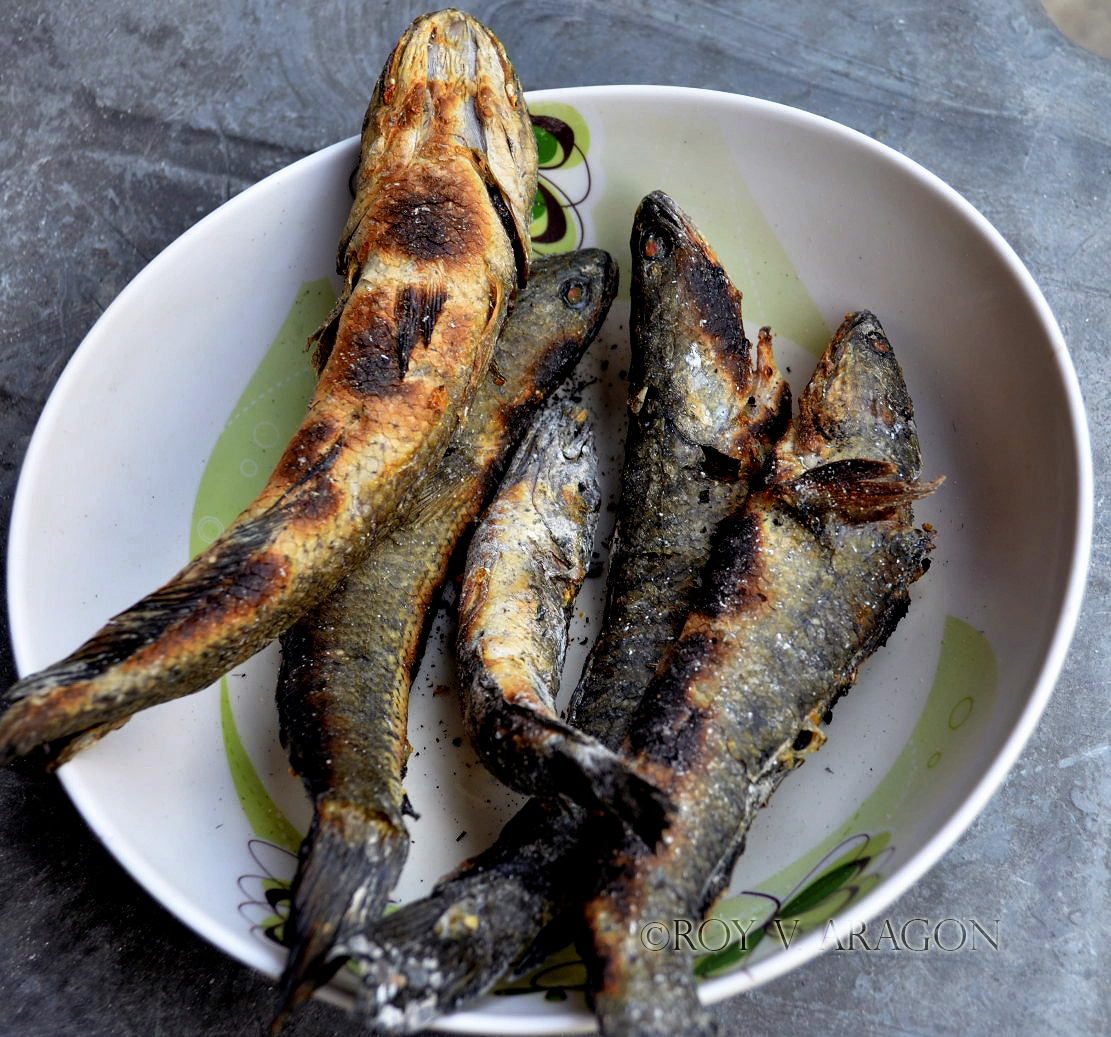
These are the blessed buntieks that I grilled. One of them luckily mingled and blended with my pinakbet a saluyot:


Here are just photographs of the heavenly dish I painstakingly created, enough perhaps to titillate your palate. But surely, you folks want to know how it came to be like this, one of the most delicious thing that I happen to cook, from the plainest of all, the lowly saluyot, now made a kind of exotic gourmet dish with that grilled buntiek atop it, basking in its all glorious deliciousness.


I just spiced it with lots of garlic, onions, ginger and of course, bugguong and suka iloko. I let the concoction boil quickly and simmer before adding the saluyot. I also added here leaves and stalks of young sweet onions. I didn't add water, I just let the bugguong and vinegar and the natural moistness of the saluyot leaves form and concoct a wonderful broth. I cooked it in low fire, slowly, so it will not burn underneath (maksetan).


I cooked the saluyot until all is wilted and a kind of slippery, and then I added the natuno a buntiek and let the broth simmer and thicken until almost dry. I made sure there is a broth left to flavor the tinimtiman and the steamed rice thereafter.


:::::


More...


2/04/2015

solsona gameng festival 2015's exotic food feast

Solsona town in Ilocos Norte has just celebrated its annual Gameng Festival (gameng is treasure) that showcased among other products native food and delicacies which can be labeled kind of "exotic" because of their rarity and/or uniqueness in that particular Ilokano town.

We featured it here in Pinakbet Republic the other year and it's one of the most visited blog. This year, Ilokano journalist and writer Leilanie Adriano has graciously provided us again some mouth-watering photographs of the Ilokano food and dishes exhibited.

Enjoy!

Nalingta a native a paltat.

Silalalat a naadobo a tukak.

Naigisa/naikirog a tukak.

Nalingta a bukto.


Naigisa nga itlog ti abuos.


Nadengdeng a bisukol.


Nakilnat/ensalada nga aba.


Ginettaan nga aba.


Napaksiw a daludal (sagibsib) ti aba.


Nakalderata a pato.


Ensalada a pako.


Nadengdeng nga agurong.


Naadobo a tukling.


:::::

More: