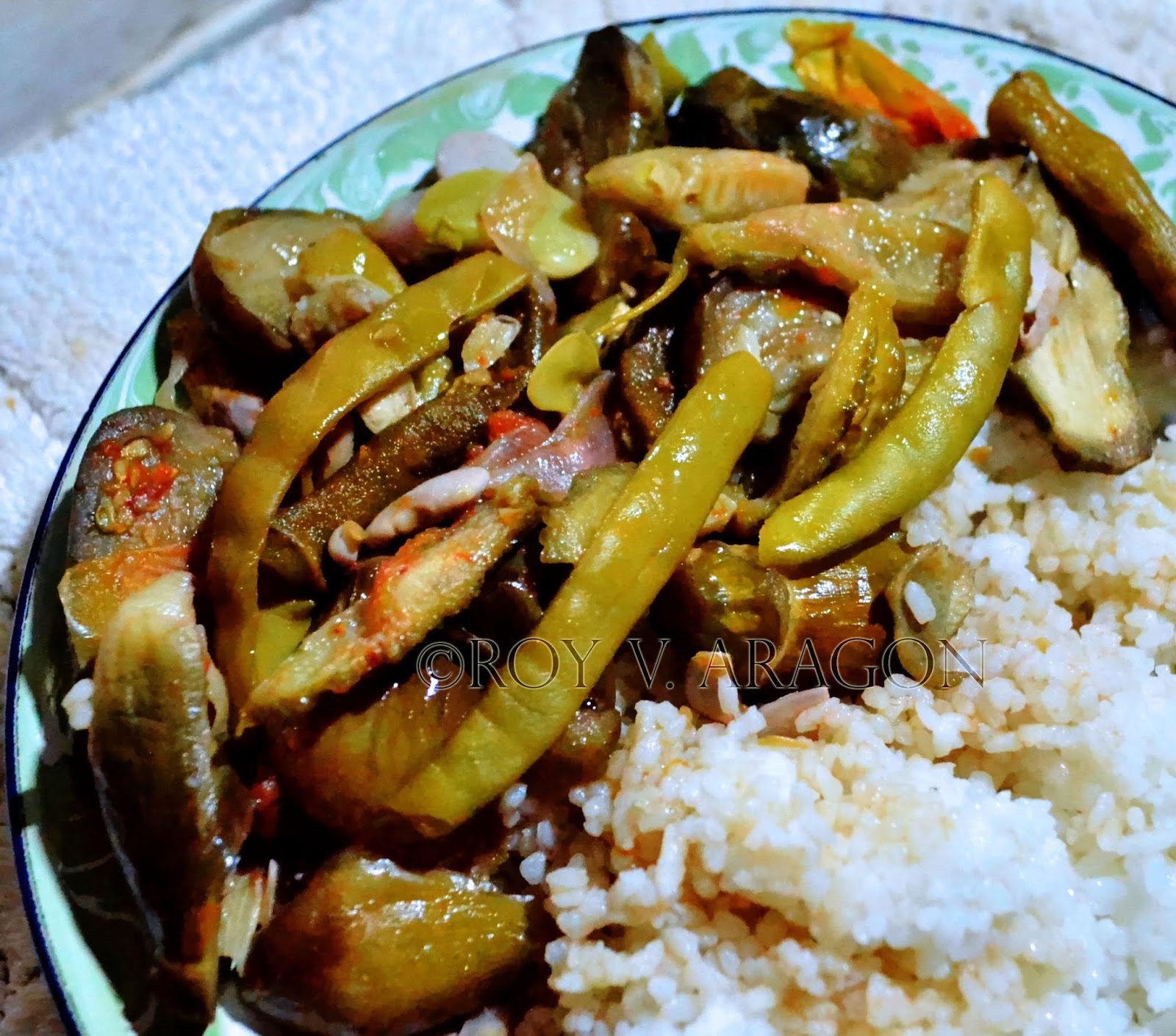
dinengdeng, glorious dinengdeng!

I'm a typical Ilokano who can't live without dinengdeng, come share my passion...

various authentic, exotic, ilokano pinakbets

Concoction or variations of this kind of exotic Ilokano dish, of this ever ubiquitous vegetable stew...

sinanglaw? paksiw? which?

What do you prefer, Vigan-sinanglaw or Laoag-paksiw? What about pinapaitan and singkutsar?

unnok/ginukan, freshwater shellfish

Want some unnok soup or ginukan bugguong?

baradibud a tugi, lesser yam vegetable stew

Tugi, for some, is only meant to be boiled and eaten simply as is. But for me, it's an indispensable ingredient for yet another hearty Ilokano dish...

Showing posts with label Philippine Recipes. Show all posts

1/20/2022

pinakbet ala-casantolan

This is the way we (well, me, actually, and if I say "we", my late mother would be a very special and a most honorable mention here because it was her who influenced me, and virtually taught me, all things about pinakbets, dinengdengs, and anything nateng) cook the great Ilokano signature dish pinakebbet, or more popularly known as pinakbet, (not the non-Ilokano [because grammatically incorrect]  Tagalogized "pakbet") in Casantolan (Nueva Vizcaya), my place of birth and early domicile, and my place of longing to be settled at again, to get back in and to return to, well, soon.

And, this is the way I cook pinakbet whenever I am in Casantolan--what with the ready ingredients available and with the cooking wares and familiar cooking traditions I was used to as a barrio boy (again, all thanks, I owe it to my mother).


On one of my random visit, I came upon these available veggies ready at home, bought at the market in Bambang and some picked right in the backyard garden: paria, tarong, okra, bunga ti singkamas, kamatis. 


I began preparing the veggies. I am happy that I chanced upon this rather rare opportunity to have these smallish native bitter melons and this variety of eggplant which is just so good for this Ilokano signature dish, the small okras, and yes, the jicama fruit.


Of course, the tomatoes. And onion and ginger. The onions are chopped, the ginger is crushed for it to give its maximum zing.


For a while, I remember something that will make my pinakbet more gorgeous and delicious. I went by the shrubberies and climbing vines and gathered some patani (also called "pulomingko") pods. These are a very good companion to an Ilokano pinakbet, I promise!


This is how I cut the tarongs. And here they are in the cooking pot. Level by level. And drenched atop with bugguong "juice". I didn't put any water. The veggies' own juices, and the bugguong's, will suffice. It will "agdanum" later as the kamatis will give all its essence to "pakbet" its veggie friends.  


And yes, this pinakbet has to be pure as in just vegetables and no sagpaws or add-ons of any kind. No meat, no fish. Nothing. Just nateng.


The singkamas will be put on top as it cooks faster. I want it crispier.


And here, I cooked it just the way a good pinakbet should be cooked--using firewood on a DIY iron stove in a makeshift "dirty kitchen" outside the house.


Note that this is the available cooking ware around, I would have slow cooked my pinakbet in an earthen pot if there's any.


And here it is, it's done:


Look at that:


Just take a look and imagine:


Isn't it an absolutely gorgeous pinakbet? Wanna bet?


Yes, this is how we, how I do, in Casantolan, with matters like pinakbet:


More:


And more:


Okey, enough. Let's eat. Here's my labay, come and partake:

12/01/2021

kilawen a babassit a talibukno


This is fresh and raw fish prepared as a "salad" or kilawen. This particular fish is called talibukno (variably identified scientifically as Leiognathus ruconiusGazza minuta, and others) and fished from Claveria, Cagayan, best as a kilawen at this size of growth, small ones and bite size so you can consume all of it, head and intestines, bones--perfect for a kilawen nga ikan just like that of the munamon/taburkit, or padas, or tirong.


A bounty fresh from the sea:

A kilogram of talibukno for the kilawen:


The preparation. Ginger and onions are a must. And salt, of course.

And a freshly squeezed calamansi juice as a souring agent with a zing (vinegar not recommended):

Mince them finely and mix:

And here it is. It invites you yo bring out your drinks as this is best for pulotan: What's missing here is, of course, sili ti sairo to make this a sure spicy hot kilawen.


Enjoy!


:::::


More kilawen nga ikan:

Follow also Ilokano Food @ Instagram and subscribe to Ilokano Food YoutTube channel for more photos, videos, and stories about Ilokano food, cooking, cuisine, and culture.


~~~~~


9/21/2021

kilawen a bilis, raw herring/sardine

 Bilis is the local sardine/herring fish (family clupeidae) which is usually consumed raw or cooked in vinegar. I like it raw or kilawen (kinilaw). Fresh bilis is prized for its sweetish flesh and oily texture (which is common in sardine and herring fishes). I came upon a fresh bilis catch from Aparri (Cagayan) town and immediately prepared some for kinilaw.

486kilawenlames1


Here's my video of the process:


I removed head and guts and washed the fish well. You can opt to fillet the fish (remove the fishbone) for a more presentable kinilaw. But for me, this time, I'm over-eager to consume it so I didn't remove the siit anymore--I'll just take care of it when I'll eat them one by one, hehehe! After washing the decapitated and gutted fish, tossed it in vinegar, minced onions and crushed and minced garlic and ginger, some salt (add cracked pepper if you like), and chilis fermented in vinegar. It's that simple. The vinegar will simply "cook" the bilis. Put in a freezer for some minutes if you want, for all the ingredients/spices to blend well with the fish flesh.

486kilawenlames2

A close up of this heavenly delicacy. See the oily skin? Great texture. The flesh is so sweetishly sour and so delicious and sumptuous with its distinct sardiny smell that blesses the palate with the taste and aroma of the raw sea:

Perfect for pulutan and as an appetizer. Mangantayon! (Originally blogged December 2, 2009) 


Some comments from the original post:
 Marlene Says:
02 December 2009 at 2:05 pm e

Saan ko pay a naramanan to fresh fish. It looks like it’s safe. i would like to try some but where can i get it here in Vancouver, Canada

 Rey Says:
02 December 2009 at 4:47 pm e

Wow ang sarap, maalala ko while i was still in the Philippines, yan ang lagi naming ginagawa specially pag season sa isdang yan. i wish mayron din yan d2 sa Vancouver.

 Vicky Says:
03 December 2009 at 5:36 pm e

Tinagan na pay kanyami no dadakel ket Baranban, ibabad ti iloko suka, pamienta ken asin overnight kinabigatan ket iprito daytoy, talaga nga naimas daytoy.

In germany this kind of fish called Herring. They eat as kilawen too,With vinegar, lots of Onion, pepper and salt.When we eat ,take the tail and start the upper part of the fish ( w/out head and bone of course)

08 December 2009 at 8:11 am e

I don’t know if this is an original Ilocano dish. When I was in Italy, they were serving this kind of dish. Meron nga lang olive oil.

 Marlene Says:
08 December 2009 at 12:25 pm e

okey that is called herring here in vancouver. i see that fish pickled and looks tasty.

 rva Says:
08 December 2009 at 12:53 pm e

bilis is classified as a sardine fish and is under the family Clupeidae which also include herrings, shads, anchovies, etc. it might be a subspecies of the pacific herring (Clupea pallasii). another species is the atlantic herring.

anyway, herring is also traditionally eaten raw in the netherlands and in some other scandinavian countries.

see http://en.wikipedia.org/wiki/Herring and http://en.wikipedia.org/wiki/Clupeidae

 aurora lambino Says:
02 January 2010 at 2:28 pm e

Thank you for this blog. I truly enjoyed looking at all your post(s), specially the pictured ilokano dishes. My mother used to cook “all” these when we were growing up in Baguio (ie my mother is a migrant from Sto Domingo, Ilocos Sur). Have not mastered any of those featured.. I do a “quasi” job with frozen ingredients I find in the supermarket doing binug-goongan nga saluyot ken marunggay, when my 96 Year old mother craves for these.. Thanks again, I will try to find squash flowers in the summer. Definitely recommending it to my friends,


:::::


More kilawen nga ikan:

Follow also Ilokano Food @ Instagram and subscribe to Ilokano Food YoutTube channel for more photos, videos, and stories about Ilokano food, cooking, cuisine, and culture.

8/21/2021

kilawen a tirong: a picnic by the beach [repost]

Tirong is small saltwater fish. It's called bonnet mouth fish and is the ingredient in the popular bugguong (bagoong, fish sauce/paste) called bugguong a tirong. Tirong when fully grown (to its adult size) is called "dalagang bukid" and is great for sinigang and escabeche or simply as fried. And of course, the inevitable kilawen, freshly caught tirong eaten raw with the pristine saltiness and sweetness and succulence of the raw sea.


Kilawen a tirong.

Stopping by at Candon City on our way to a writer's convention in La Union, we decided to rest awhile and while away the thick and humid Ilocos summer heat and take a dip at the Ilocos Sur sea.


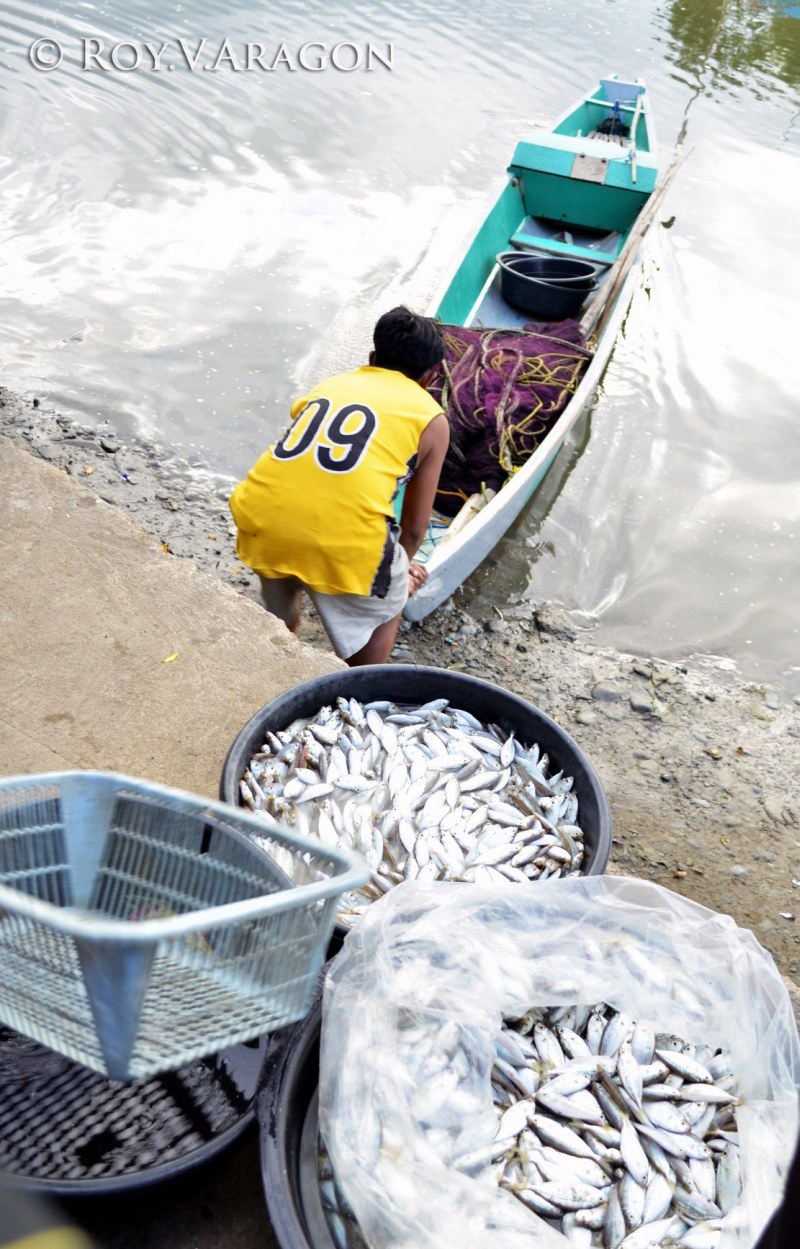
We went to a beach at Barangay Calungboyan and there we were lucky enough to come upon some fishermen who just came ashore in a rakit (balsa, bamboo raft) with their sea bounty.


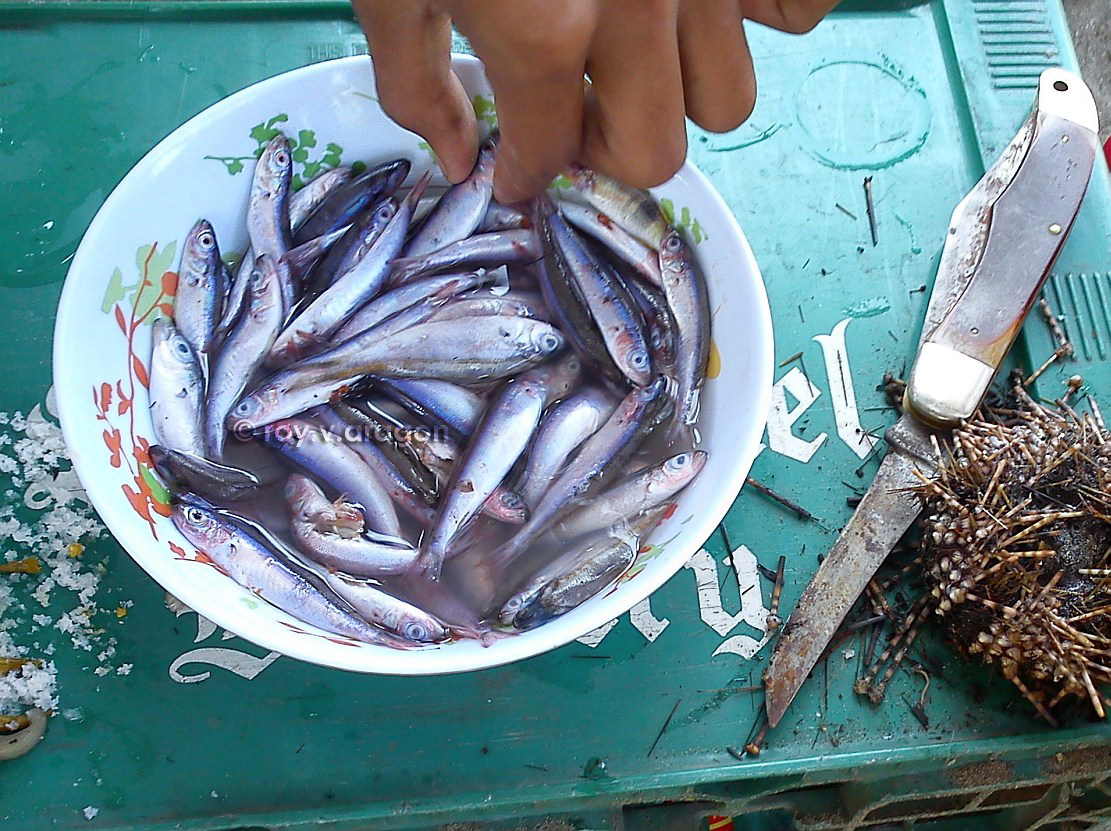
There, the precious tirong, about 3 kilos of it, the only catch so far of the jolly Ilokano mangngalap (fisherman), besides a single pana-pana (sea urchin) and a baby kurita (octopus).


We bought all the tirong, of course, as we are so over-eager to have a taste of its freshness, its inviting deliciousness, its mouth-watering rawness...

We unanimously voted to have it as kilawen. No way should its freshness and succulence be wasted! And so we simply made it with available condiments. We poured vinegar on the tirong and it's done, it's that simple. With some salt and chili by the side.


You have to pick the tirong by hand, have some salt on it and eat it right on, have your mouth and palate some guilty pleasures. Its flesh is sweetish, a little bitter because of its intact entrails, briny with the natural taste of the raw sea. Eat it all, fishhead and fishbone, it's so small you can chew all its goodness.


And but of course, it's more palatable and with drinks, its inevitable partner. We've got a case of Red Horse Litro to down the great kilawen a tirong.


Ah! Goodness gracious, how refreshing and delectable life could be at the seashore. Life's a beach, indeed!


Drinkers. :-)

Calongbuyan Beach
Candon City, Ilocos Sur.


:::::