dinengdeng, glorious dinengdeng!

I'm a typical Ilokano who can't live without dinengdeng, come share my passion...

various authentic, exotic, ilokano pinakbets

Concoction or variations of this kind of exotic Ilokano dish, of this ever ubiquitous vegetable stew...

sinanglaw? paksiw? which?

What do you prefer, Vigan-sinanglaw or Laoag-paksiw? What about pinapaitan and singkutsar?

unnok/ginukan, freshwater shellfish

Want some unnok soup or ginukan bugguong?

baradibud a tugi, lesser yam vegetable stew

Tugi, for some, is only meant to be boiled and eaten simply as is. But for me, it's an indispensable ingredient for yet another hearty Ilokano dish...

Showing posts with label Bitter. Show all posts

11/29/2021

pinakbet a nakaparparia

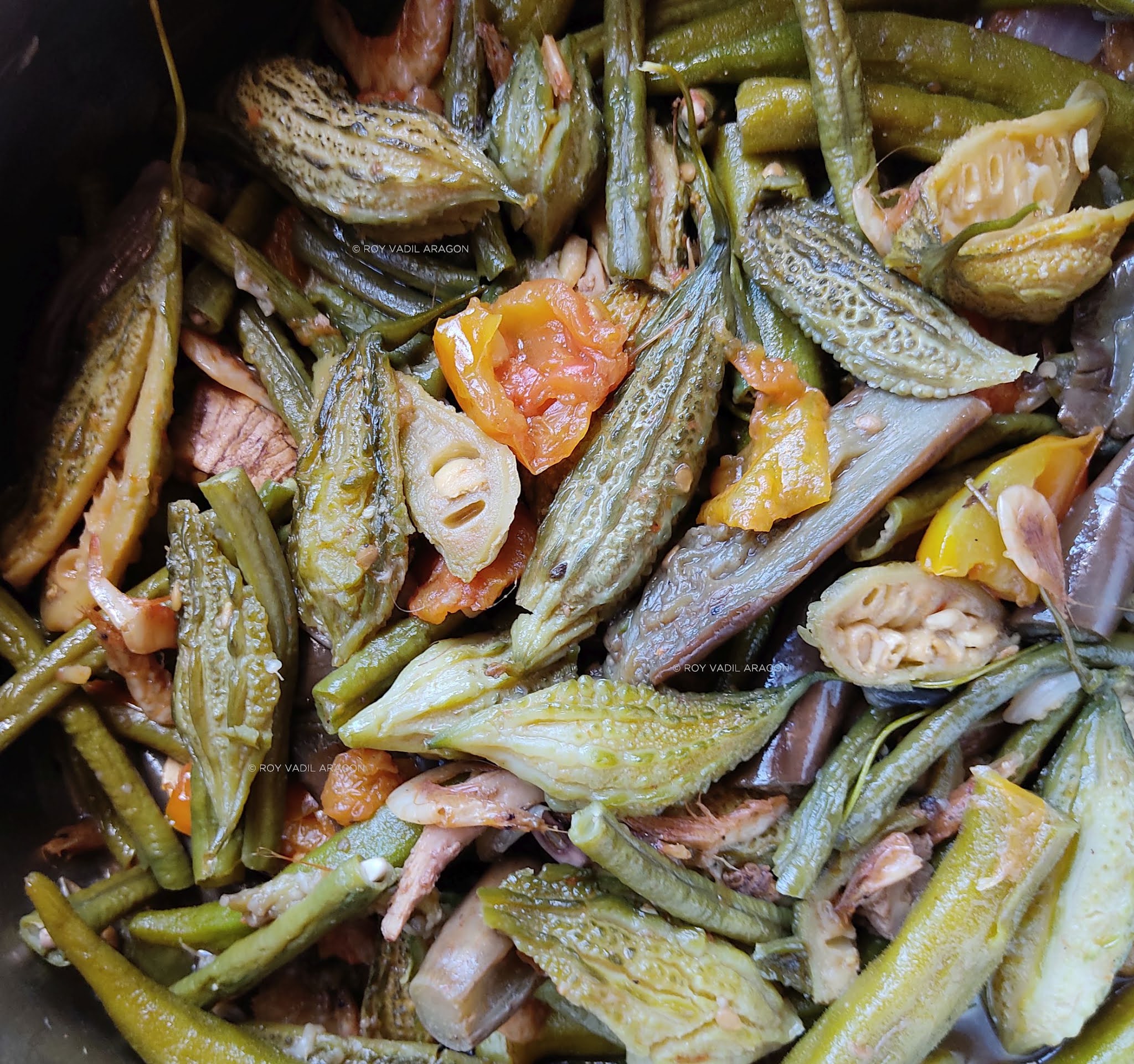
What makes an Ilokano pinakbet or a pinakbet preferred by Ilokanos is that it is ,and it should be with, and not just with, but full of, paria or bitter melon. Because the Ilokano is known by its food preference for pait or bitterness, the more a pinakbet has paria, the more it is a sumptuous and delightful feast of bitterness and saltiness (of the preferred condiment bugguong--salt-fermented fish and not shrimps, of course!).

I always like my pinakbet to be nakaparparia, nakapapait, full of this beloved Ilokano veggie fruit--the native and wild variety is a must, too, for more bitterness to be rendered, endured, and enjoyed.

This is my recent pinakbet a nakaparparia, as a proof of pinakbet concept and life, the patneng nga Ilokano way:


And here are the ingredients from which I designed this perfect, well, almost, vanity pinakbet:

These are freshly picked/harvested bitter goodies from my container garden. Ilocos species of a paria kind, not the native one, though, but a hybrid of sort.


Some of the obligatory and faithful paria company for a pinakbet: kamatis, tarong, okra, and utong. Sili is not available at the time. And of course no karabasa here ever as it's a no-no for an Ilokano pinakbet to have a karabasa (only Tagalog 'pakbet' variations, with an awkward shrimp paste, has it)


This is it, once again, the by-product:


And this here is my own labay, pardon my gluttony, but this is pinakbet with lots of paria, so, let me just indulge:


And pardon, this is me not bragging about an Ilokano gourmet food but me inviting you to "mangantayon, apo, pagan-anusan ti adda!" let's eat, folks!


::::


More, about pinakbet:


For more Ilokano vegetable dishes, you can 
follow Ilokano Food page on Facebook and enjoy more sumptuous photos of dinengdeng and other vegetable dishes plus more veggies

Follow also Ilokano Food @ Instagram and subscribe to Ilokano Food YoutTube channel for more photos, videos, and stories about Ilokano food, cooking, cuisine, and culture.


8/07/2019

kinilnat a papait with padas

Papait once more. Can't get enough with papait as long as it is readily available. Especially when I chance upon the so-called "native" one that just grows in the wild in wild abandon. and not the "commercially" propagated and cultivated "big" and "hybrid" papait usually being sold in the market. The native papait is more bitter and so, it is more preferred by the devotedly pait-loving Ilokano in us.


And it is best as a kind of salad. Blanched and not boiled. And simply garnished with its usual partner, KBL, kamatis-bugguong-lasona (tomatoes, salt-fermented fish sauce, onions). For souring anyway, calamansi is also used instead of tomatoes for that more zingy sourness to enhance its wonderful pait-ness.


Anyway, I have here a bugguong a padas (salt-fermented tiny siganid fish) and promises a more exciting papait dish because you have to consume the fermented fish itself and not just its sauce. It's still a KBL partner with the B in there because padas is still a bugguong. The tiny padas is actually the fry of the barangan or malaga fish. Freshly-caught padas is also a delicious fish kilawen (raw).


Here, it's ready to be blanched:


And here's the final product:


There's the padas, the little ones:


The sweetish saltiness of the fermented tiny fish is just so a perfect for the almost extreme sweet bitterness of the papait:


:::::


More papait dishes:


7/10/2019

papait salad ken dinengdeng

Pait time, again, and this time, let’s enjoy probably the bitterest, the kapapaitan, of them all: papait itself (mollugo oppositifolia; malagoso or sarsalida in Tagalog; it has a name in English, too, it’s slender carpetweed).

I usually just blanch papait and turn it into a salad with KBL (kamatis, bugguong, lasona) to serve as an appetizer or a side dish to meat (especially adobo) dishes (though, for me, I can live with papait salad as a sole viand to my steamed rice):


But of course, as a vegetable, papait is also good for dinengdeng, best with legumes like balatong, kardis, and patani here:


:::::


More papait certified delicious dishes:


1/25/2019

pinapaitan a kalding, goat intestines stew

This is goat intestine stewed, literally, with its own juice--the extract of the masticated grass inside the intestines. It's a savory, bitter soup favored by Ilokanos. And goat's is prized for this kind of exotic dish, called "pinapaitan", aside from that of beef or carabao (water buffalo). It's not really an exotic one as this is so common in the Philippines especially in the Ilocos region, or where the Ilokano people have settled for good.


Cooking this kind of exotic dish (well, a delicacy of some sort) is simple as doing the usual pinapaitan. Just boil it. Until tender enough. Spice it with lots of onions, garlic, ginger, black pepper. Add some meat and liver pieces. Optionally, you can add a little sourness like that of pias or salamagi.

Now here's the boiled and tenderized whole intestine being cut into bite pieces:


Gorgeous!


:::::


More pinapaitan and kalding tales:


1/21/2019

dinengdeng nga uong ken kabatiti ken balang a paria, straw mushrooms soup with patola and wild bittermelon

Mushrooms, mushrooms! And what’s more delicious than those growing and picked from the wild, like these gorgeous straw mushrooms (locally called uong garami or uong saba):

And paired with these equally wild or “native” vegetables for a truly exotic veggie delicacy—wild bittermelon (balang a paria) shoots and fruit, and patola (sponge gourd, kabatiti):

Small but insanely bitter vegetable fruit to challenge or tantalize your palate:


Cooked in the traditional Ilokano dinengdeng way, here’s the eventual result—all that mushroom flavor with the double dose of exotic wild paria bittery goodness and sweetened by the native kabatiti, all in fusion with the essence of bugguong (fish paste/sauce). And no, if you cooked it right and rightful, the kabatiti will not make it the more bitter but its sweetness as fruit veggie will magically moderate the pait of the paria. The end result is just so amazing and a beauty to behold:


::::::::


See more mushroom treats and recipes:


  • Uong ken lantong-utong, wild mushroom with young bean stalks/shoots
  • Dinengdeng nga uong-mais ken uggot-marunggay, wild mushrooms and marunggay leaves
  • Dinengdeng nga uong-bunton ken balang a paria, wild mushroom soup with bitter melon leaves


  • 1/19/2019

    mongo beans soup with rattan bud/shoot

    Boiled balatong (mongo, mung beans), sautéed with lots of onions and garlic, is one stable Filipino viand especially preferred during rainy and cold days. Paired with a variety of other vegetables (specially green leafy veggies) and meat and fish sagpaws (add-on), it’s one appetizing dish to go with steamed rice. A favorite companion vegetable is usually the leaves or fruit of paria (amargoso, ampalaya, bitter melon) as the bitterness of it is just a perfect flavor of the exotic kind to blend with the starchy balatong.


    And speaking of exotic bitterness, here’s a bunch of ubog ti way (rattan bud/shoot) to offer just that bitterness:


    Peeling of the stalks of the shoots:


    And there’s the boiled balatong ready:


    The ubog now cut and ready:


    The sautéed balatong now being boiled with the ubog ti way:


    And it’s done, here’s one bean soup with a touch of exoticness, bitter but so delicious and comforting:


    See more ubog recipes:


    1/16/2019

    kilawen a kalding, goat skin, meat, and liver "salad"

    This is "kilawen a kalding" ("kilawing kambing" in Tagalog) or goat's singed/burnt skin and grilled meat and liver chopped and spiced and made into a kind of "salad." An Ilokano dish, it is kind of "exotic" to others but is a popular goat dish throughout the Philippines. What's distinctly Ilokano about it is that Ilokano folks, used to bitterness, err, bitter food, usually season it with the goat's bile or the pespes (extract of the undigested grass) itself.


    Let's take a look at the mystery of this authentic Ilokano delicacy... Here's the goat's skin/hide, its hair singed, cleaned, this is slightly boiled to tenderize the hide:


    And this is the meat and the liver, slightly grilled and so it's succulent and sweet:


    Chopping time!


    Chopped goat goodies:

    And spiced with onions, ginger, salt, some vinegar (calamansi juice is more preferred), chili if you prefer it really spicy, and pour in some bile or pespes and thoroughly mix the whole lot and it's ready. This is the best for pulutan or finger food for drinks!


    Related dish:


    ~~~~~

    1/23/2015

    pinapaitan a kamanokan, "native" chicken bitter soup

    To continue on our kamanokan series on native free range chicken Ilokano dishes (lauya, dinardaraan, adobo), we'll conclude here with yet another kind of "exotic" dish that delights most Ilokanos: it's pinapaitan a manok! This is a rather unusual chicken soup and I bet some may frown at the idea or are not aware that, of course, your favorite tasty kamanokan can also have its own pinapaitan; not just the usual pinapaitan that you know (kalding, baka, nuang).

    Pinapaitan a kamanokan.

    This is part of the chicken giblet set aside for dinardaraan and pinapaitan: cut batikuleng (gizzard), dalem (liver), puso (heart), bara (lungs), some silet or bagis (intestines), and the "bittering agent" which is the apro (bile).


    Here's what we're going to turn into an absolutely delicious pinapaitan. I added some strips of meat and skin. And that's the apro in the little red square bowl:


    Sauté it in little cooking oil with lots of bawang, lasona and the laya, season with salt or patis and pepper; stir fry it until it oozes its yellowish own fat and the meat and skin and the rest of the giblet turn brown:


    Pour in enough water for your soup, simmer for a few minutes and then add the apro. Don't put in all of the bile though, moderate bitterness by having a taste of the soup. Put in more bile if you prefer a really bitter pinapaitan. Put off fire and serve it hot and steaming. The resulting soup will be like this:


    The kamanokan broth will turn more yellow with the apro, more golden, which is just so absolutely gorgeous and insanely delicious bitter soup so tasty and savory:


    Optionally, if you're a really pinapaitan connoisseur, you can add more pait into your pinapaitan by adding paria leaves (a tinola with paria leaves or fruit is great as well).

    :::::


    More about kamanokan (native free range chicken):