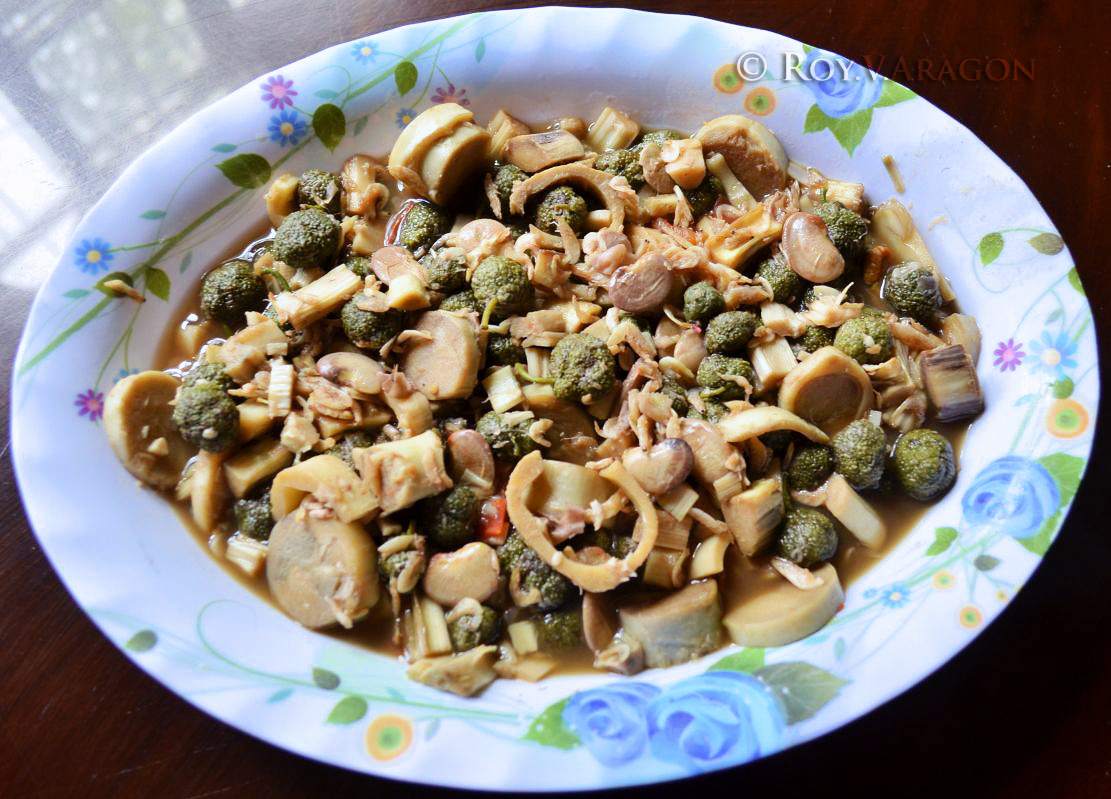
dinengdeng, glorious dinengdeng!

I'm a typical Ilokano who can't live without dinengdeng, come share my passion...

various authentic, exotic, ilokano pinakbets

Concoction or variations of this kind of exotic Ilokano dish, of this ever ubiquitous vegetable stew...

sinanglaw? paksiw? which?

What do you prefer, Vigan-sinanglaw or Laoag-paksiw? What about pinapaitan and singkutsar?

unnok/ginukan, freshwater shellfish

Want some unnok soup or ginukan bugguong?

baradibud a tugi, lesser yam vegetable stew

Tugi, for some, is only meant to be boiled and eaten simply as is. But for me, it's an indispensable ingredient for yet another hearty Ilokano dish...

Showing posts with label Salads. Show all posts

9/21/2021

kilawen a bilis, raw herring/sardine

 Bilis is the local sardine/herring fish (family clupeidae) which is usually consumed raw or cooked in vinegar. I like it raw or kilawen (kinilaw). Fresh bilis is prized for its sweetish flesh and oily texture (which is common in sardine and herring fishes). I came upon a fresh bilis catch from Aparri (Cagayan) town and immediately prepared some for kinilaw.

486kilawenlames1


Here's my video of the process:


I removed head and guts and washed the fish well. You can opt to fillet the fish (remove the fishbone) for a more presentable kinilaw. But for me, this time, I'm over-eager to consume it so I didn't remove the siit anymore--I'll just take care of it when I'll eat them one by one, hehehe! After washing the decapitated and gutted fish, tossed it in vinegar, minced onions and crushed and minced garlic and ginger, some salt (add cracked pepper if you like), and chilis fermented in vinegar. It's that simple. The vinegar will simply "cook" the bilis. Put in a freezer for some minutes if you want, for all the ingredients/spices to blend well with the fish flesh.

486kilawenlames2

A close up of this heavenly delicacy. See the oily skin? Great texture. The flesh is so sweetishly sour and so delicious and sumptuous with its distinct sardiny smell that blesses the palate with the taste and aroma of the raw sea:

Perfect for pulutan and as an appetizer. Mangantayon! (Originally blogged December 2, 2009) 


Some comments from the original post:
 Marlene Says:
02 December 2009 at 2:05 pm e

Saan ko pay a naramanan to fresh fish. It looks like it’s safe. i would like to try some but where can i get it here in Vancouver, Canada

 Rey Says:
02 December 2009 at 4:47 pm e

Wow ang sarap, maalala ko while i was still in the Philippines, yan ang lagi naming ginagawa specially pag season sa isdang yan. i wish mayron din yan d2 sa Vancouver.

 Vicky Says:
03 December 2009 at 5:36 pm e

Tinagan na pay kanyami no dadakel ket Baranban, ibabad ti iloko suka, pamienta ken asin overnight kinabigatan ket iprito daytoy, talaga nga naimas daytoy.

In germany this kind of fish called Herring. They eat as kilawen too,With vinegar, lots of Onion, pepper and salt.When we eat ,take the tail and start the upper part of the fish ( w/out head and bone of course)

08 December 2009 at 8:11 am e

I don’t know if this is an original Ilocano dish. When I was in Italy, they were serving this kind of dish. Meron nga lang olive oil.

 Marlene Says:
08 December 2009 at 12:25 pm e

okey that is called herring here in vancouver. i see that fish pickled and looks tasty.

 rva Says:
08 December 2009 at 12:53 pm e

bilis is classified as a sardine fish and is under the family Clupeidae which also include herrings, shads, anchovies, etc. it might be a subspecies of the pacific herring (Clupea pallasii). another species is the atlantic herring.

anyway, herring is also traditionally eaten raw in the netherlands and in some other scandinavian countries.

see http://en.wikipedia.org/wiki/Herring and http://en.wikipedia.org/wiki/Clupeidae

 aurora lambino Says:
02 January 2010 at 2:28 pm e

Thank you for this blog. I truly enjoyed looking at all your post(s), specially the pictured ilokano dishes. My mother used to cook “all” these when we were growing up in Baguio (ie my mother is a migrant from Sto Domingo, Ilocos Sur). Have not mastered any of those featured.. I do a “quasi” job with frozen ingredients I find in the supermarket doing binug-goongan nga saluyot ken marunggay, when my 96 Year old mother craves for these.. Thanks again, I will try to find squash flowers in the summer. Definitely recommending it to my friends,


:::::


More kilawen nga ikan:

Follow also Ilokano Food @ Instagram and subscribe to Ilokano Food YoutTube channel for more photos, videos, and stories about Ilokano food, cooking, cuisine, and culture.


7/10/2019

papait salad ken dinengdeng

Pait time, again, and this time, let’s enjoy probably the bitterest, the kapapaitan, of them all: papait itself (mollugo oppositifolia; malagoso or sarsalida in Tagalog; it has a name in English, too, it’s slender carpetweed).

I usually just blanch papait and turn it into a salad with KBL (kamatis, bugguong, lasona) to serve as an appetizer or a side dish to meat (especially adobo) dishes (though, for me, I can live with papait salad as a sole viand to my steamed rice):


But of course, as a vegetable, papait is also good for dinengdeng, best with legumes like balatong, kardis, and patani here:


:::::


More papait certified delicious dishes:


10/20/2013

ensalada a rabong, bamboo shoot salad


Rabong salad, with bugguong and onions.
Rabong, bamboo shoot, is a versatile veggie dish in that it can be turned into various dishes, and foremost of it, Ilokano-wise, is the famous dinengdeng duo: rabong ken saluyot. The tender bamboo bud can be made into an adobo a rabong, ginisa a rabong, achara a rabong, ginettaan a rabong, can even be a veggie ingredient in soups like sinigang and lauya. And many more.

I found this huge rabong in the public market in Claveria, Cagayan. I forgot to take a photo of the towering shoot before I peeled off its “bark” but this is it when I cleaned it and ready to be cut for cooking:

This is how I simply prepare rabong, no fancy chopping or mincing, I just chop-chop-chop atop it vertically and slice it off into uneven sticks or strips. Rabong fine cutters there might frown at me with their elaborate cuts. But this is what I learned as a child when we hunt down rabong in thick and thorny bamboo thickets and prepare it this way quickly for the day’s lunch or dinner of dinengdeng or ginisa a rabong:

I just chop and chop it out and slice and slice it off, the bud getting smaller and smaller:

And it’s done:

Now, the boiling. Rabong should be boiled first to get rid of its bittery taste. Although some rabong variety are mildly bitter and sweetish and can be cooked straight into a delicious dish without boiling. Some prefer a more bittery rabong, by the way. The rabong of the bayog and kiling variety of bamboo is somewhat more bitter. This one I boiled it just for a few minutes, it’s not the more bittery variety, of which I most prefer for my my different dishes later:


The boiled rabong. It turns yellowish when cooked. Squeeze and rinse. I do not squeeze much my rabong, though. You might be discarding some important essence, nutrients and all that, if you squeeze much of its natural succulence just to get rid of its bitterness completely, and it will become a bland rabong:

Now, the rabong, preboiled, is ready for your dish of choice:

What I initially prepared, for a quick fix, is the easiest and simpliest one—
rabong salad, ensalada a rabong:

This is my favorite rabong dish, in that I say it’s the tastiest one you can have out of a freshly cut and cooked rabong. You can be assured that you’ll get all the rabongness that there’s to it. I just simply dress the boiled rabong with bugguong, sliced onions, some umami (MSG; if you prefer), some calamansi squeezes (or even some drops of can vinegar, if you prefer), toss it, and it’s done:

This goes so well with steaming rice, fried rice, kilabban. I usually mix in a teaspoon of cooking oil on my rice (newly concocted coconut oil or nasinglag a lana ti niog, is perfect for this) whenever I have a rabong salad like this and it’s a kind of guilty pleasure because I unsconciously consume a lot rice. As an option, if you have olive oil, you can drench some drops of it right on the rabong salad, for that real salad kick:


Next: other dishes I prepared out of this huge rabong. Padaanan!


:::::

3/09/2013

ubog ti way, rattan bud (heart)

Tinuno nga ubog ti way, narekaduan iti kamatis, bugguong ken lasona. (Click photo for a larger view) 
It's becoming rare that I see ubog ti way (rattan bud) in my market forays, especially so in Cagayan, so When I chanced upon some bundles of ubogs sold at the public market in Gonzaga, Cagayan, I bought outright a bundle of four large and smaller pieces for Php100:


Maybe even rattan vines in the remaining forested areas are rare these days what with the demand of rattan craft and furniture by some people fond of "native" decor. And of course, the denuding of forests due to illegal logging of the trees with which the rattans climbs and dwells, so what can we expect?


But anyway, the first thing in mind when I saw these childhood favorite (yes, I as a child has live in bitter life--that is, an Ilokano child of a poor family in a farming community, used to simple vegetable dishes like papait, paria and ubog [in our place, though rattan is also rare, there used to be a wild or smaller variety called barit on which the bid of it is equally bitter and sumptous]), is that I'll be grilling them over fire and make it into a delicious ubog salad--tinuno nga ubog ti way with KBL (kamatis, bugguong, lasona)--so, here I roasted them ubogs over gas fire, the only available fire I've got at the moment, it could have been better over wood or charcoal fire but it's not available, this will suffice, as long as it'd be roasted evenly and well:

And here's is, the cooked ubog inside the burnt bark:

I cut the cooked ubog thinly, with kamatis and lasona:

And here's the end-result of my labor of love--thinly sliced ubog ti way, garnished with tomatoes and onions and drenched with bugguong essence--I tell you, it's like heaven, an ambrosia of sort, the bittery goodness lingered in my palate as I savored memories and tastes and flavors and delights of childhood and the simplicity and modesty of rural life which I always miss, the bittery quality and pride of being an Ilokano:


The next day, I decided on a dinengdeng nga ubog with the remaining pieces--with patani and kalalaki nga alukon (see separate blog post on my dinengdeng a kalalaki nga aluko and ubog ti way):

I cleaned the raw ubog to get just the heart of it, the precious bud:


And again, I thinly sliced the ubog for my dinengdeng--see how promising it is, the sweetish bitterness it brings to satisfy any dinengdeng- and pait-freak Ilokano that there is:


And this is it, my dinengdeng--what a bliss, what a blessing to be able to partake such gastronomic opportunity like this, once more, again, in a lifetime:


:::::