dinengdeng, glorious dinengdeng!

I'm a typical Ilokano who can't live without dinengdeng, come share my passion...

various authentic, exotic, ilokano pinakbets

Concoction or variations of this kind of exotic Ilokano dish, of this ever ubiquitous vegetable stew...

sinanglaw? paksiw? which?

What do you prefer, Vigan-sinanglaw or Laoag-paksiw? What about pinapaitan and singkutsar?

unnok/ginukan, freshwater shellfish

Want some unnok soup or ginukan bugguong?

baradibud a tugi, lesser yam vegetable stew

Tugi, for some, is only meant to be boiled and eaten simply as is. But for me, it's an indispensable ingredient for yet another hearty Ilokano dish...

Showing posts with label Aphrodisiac. Show all posts

10/15/2020

kaggo & karibuyo

Kaggo & karibuyo soup.
Kaggo is a big clam found in brackish and muddy waters in Cagayan, where rivers or swamps meet with the sea or sea water, usually under or along nipa trees. Also called kappo in other places, it is the same as the lukan of the Tagalogs. But they're more abundant and popular on the notherrn Cagayan towns along the coast, like Sanchez Mira, Pamplona, Abulug, Ballesteros, Aparri, Buguey and Sta. Teresita. Karibuyo is a sea clam gathered along the seashore of same coastal towns including Claveria, Gonzaga and Sta. Ana.


Kaggo can be made into a savory soup or stew, boiled/blanched, grilled, or simply into a kilawen or eaten raw right from the shell dipped in calamansi juice just like that of oysters. Its meat shucked, it's perfect as a sagpaw (add-on) to your dinengdeng or pinakbet or as a topping in pancit dishes like bijon or canton or other seafood dishes.

Karibuyo is so good as a soup, its broth is so tasty with the karibuyo's great juicy meat. It can also be consumed raw, the meat and "juice" mildly salty like that of gakka (tiny sea clams consumed as a saramsam or snacks just like watermelon seeds) shells.


Karibuyo for sale at the municipal fish port in Sta. Teresita, Cagayan.


Kaggo being grilled.
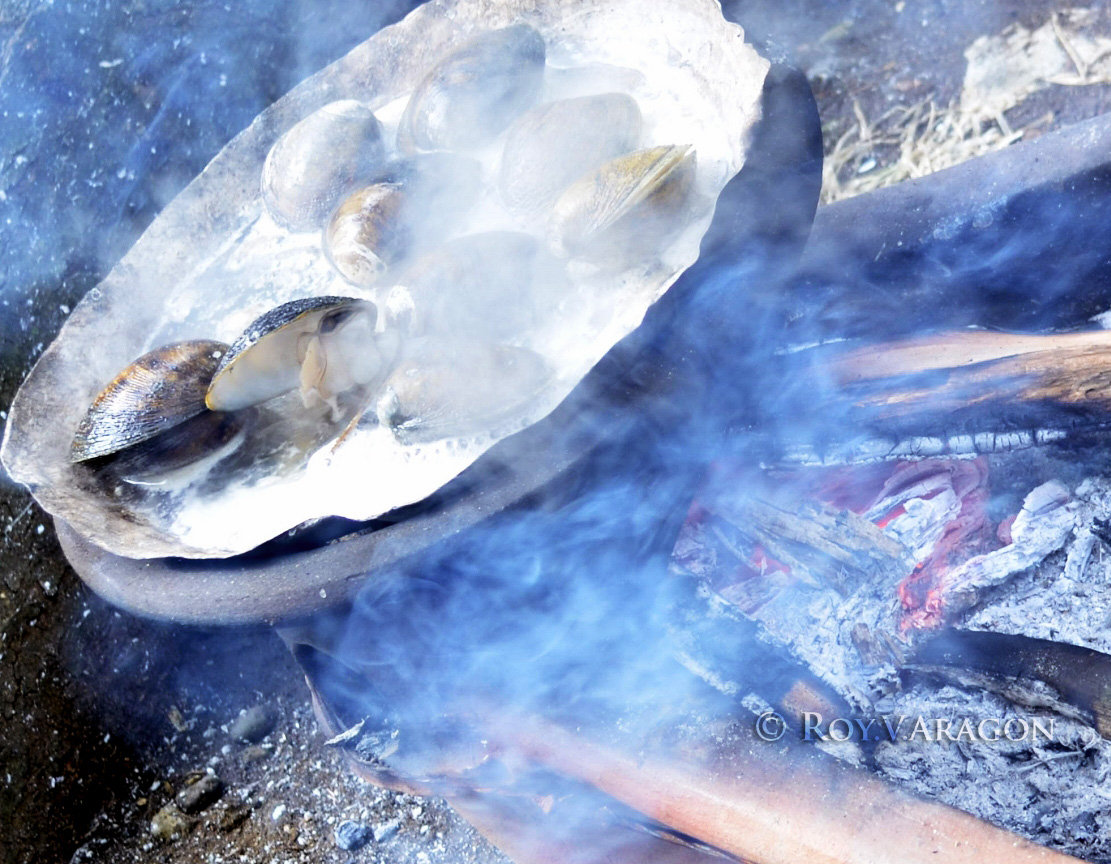


Shucked grilled kaggo in Villa, Sta. Teresita, Cagayan.


Slightly boiled kaggo, ready to be shucked for my kaggo "salad." If you prefer to boil kaggo, don't overcook it to retain the "fatness" and succulence of the meat. Just boil it mildly just so its shells crack slightly for you to break it open. Save its naturally salty "juice" as a broth.


Slightly boiled kaggo meat with its own juice as a little broth. I seasoned it with some salt, garnished with onions and ginger, and soured it with calamansi.


The karibuyo, I made into a kind of tinola. I sauteed onions, garlic, ginger and tomatoes in little oil, and boiled it with some pieces of chayote, and then the karibuyo shells. Don't overcook the karibuyo. Just put it in when the broth is boiling. Simmer quickly and put off fire immediately and serve hot when the shells are open.


Enjoy tinola a karibuyo. The soup is so good, the meat is just so tasty.


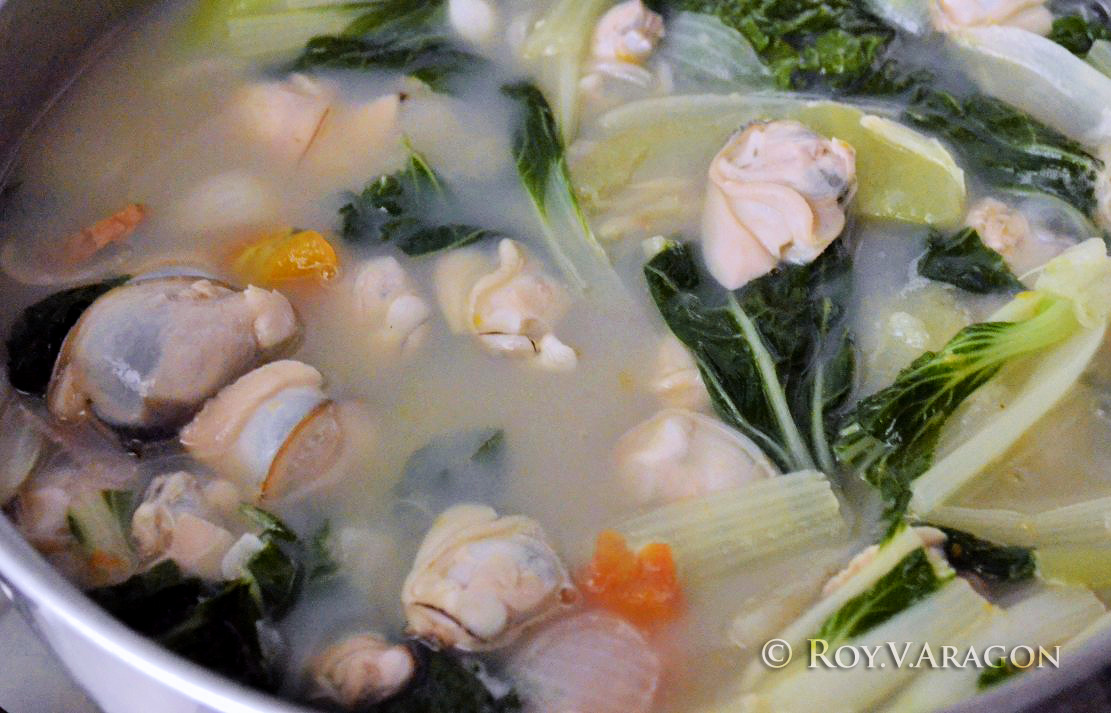
I reserved some of the kaggo "salad" and tinola a karibuyo for what a "lethal" ("pamatay" he-he!) dish that I'm planning for the next day. And here's it, I made it into a combo kaggo and karibuyo soup: I mixed all the meat of the shells and their soup/broth and made it into one great clam soup with petchay (I just browned/caramelized some garlic and onions, poured the soup and boiled it and then I put in the petchay stalks and leaves, and then the kaggo & karibuyo meat):


What a bliss!

:::::

10/30/2013

kappukan nga addaan silet, raw beef with tripes

Kappukan nga addaan silsilet.
Kappukan (also called ata-ata), raw beef tender loin meat, is usually prepared as is, meat only, uncooked of course, freshly sweet and incredibly delicious, with only salt and onions, and chili.

Or with a blanched pespes (pinespes, also called papait) or fresh bile added and diluted for bitter-loving Ilokano folks, and in some preparation, bits of liblibro and tualtualia (beef tripes, or the black insides of the large intestines that resembles “pages of a book,” and “towel”, hence the name), and raw beef liver.

Or with silet (isaw, the small intestines, technically also tripe), cooked rare or medium rare (blanched or slightly boiled).

The meat and offal for beef kappukan can be obtained right in the slaughter house, to assure you of its freshness, from newly butchered cows. Here, this is the municipal slaughter house of Sanchez Mira, Cagayan:

There’s the liblibro at the bottom, left:

These are pespes ready in cellophane sachets, to be paired with every purchase of meat and offal for pinapaitan, imbaliktad, or kappukan:

And here’s the beef for kappukan—the meat, the liblibro, the tualtualia, and the silet:

Cutting up, mincing up. The silet is slightly boiled to tenderize it a bit and remove its raw smell. The liblibro and tualtualia are to be raw, okey, scald it quickly, but don’t boil it:

Mix the kappukan thoroughly, season with salt and pepper and toss it with sliced red onions and minced chili (optional). Boil the pespes and let it cool first before adding to the mixture. Don’t put in vinegar or even calamansi, as the sourness will “cook” the meat, this is supposed to be kappukan or ata-ata so it should be raw and fresh meat. You can opt to have vinegar with fermented chili if you want to and just dip the kappukan in it.

Enjoy it with your favorite drink!


Here are more recent kappukans I'm opportuned to have partaken with buddies:
Preparing kappukan a nuang (carabeef). Note the liblibro and tualtualia.

Kappukan a nuang.


Another carabeef kappukan, papait to the extreme.

Kappukan a baka.

Another beef kappukan. Note the raw liver.

Kappukan a baka.

Pure beef meat kappukan, no tripes.


::::