 |
| Tinuno nga ubog ti way, narekaduan iti kamatis, bugguong ken lasona. (Click photo for a larger view) |

Maybe even rattan vines in the remaining forested areas are rare these days what with the demand of rattan craft and furniture by some people fond of "native" decor. And of course, the denuding of forests due to illegal logging of the trees with which the rattans climbs and dwells, so what can we expect?

But anyway, the first thing in mind when I saw these childhood favorite (yes, I as a child has live in bitter life--that is, an Ilokano child of a poor family in a farming community, used to simple vegetable dishes like papait, paria and ubog [in our place, though rattan is also rare, there used to be a wild or smaller variety called barit on which the bid of it is equally bitter and sumptous]), is that I'll be grilling them over fire and make it into a delicious ubog salad--tinuno nga ubog ti way with KBL (kamatis, bugguong, lasona)--so, here I roasted them ubogs over gas fire, the only available fire I've got at the moment, it could have been better over wood or charcoal fire but it's not available, this will suffice, as long as it'd be roasted evenly and well:


And here's is, the cooked ubog inside the burnt bark:

I cut the cooked ubog thinly, with kamatis and lasona:

And here's the end-result of my labor of love--thinly sliced ubog ti way, garnished with tomatoes and onions and drenched with bugguong essence--I tell you, it's like heaven, an ambrosia of sort, the bittery goodness lingered in my palate as I savored memories and tastes and flavors and delights of childhood and the simplicity and modesty of rural life which I always miss, the bittery quality and pride of being an Ilokano:


The next day, I decided on a dinengdeng nga ubog with the remaining pieces--with patani and kalalaki nga alukon (see separate blog post on my dinengdeng a kalalaki nga aluko and ubog ti way):


I cleaned the raw ubog to get just the heart of it, the precious bud:


And again, I thinly sliced the ubog for my dinengdeng--see how promising it is, the sweetish bitterness it brings to satisfy any dinengdeng- and pait-freak Ilokano that there is:


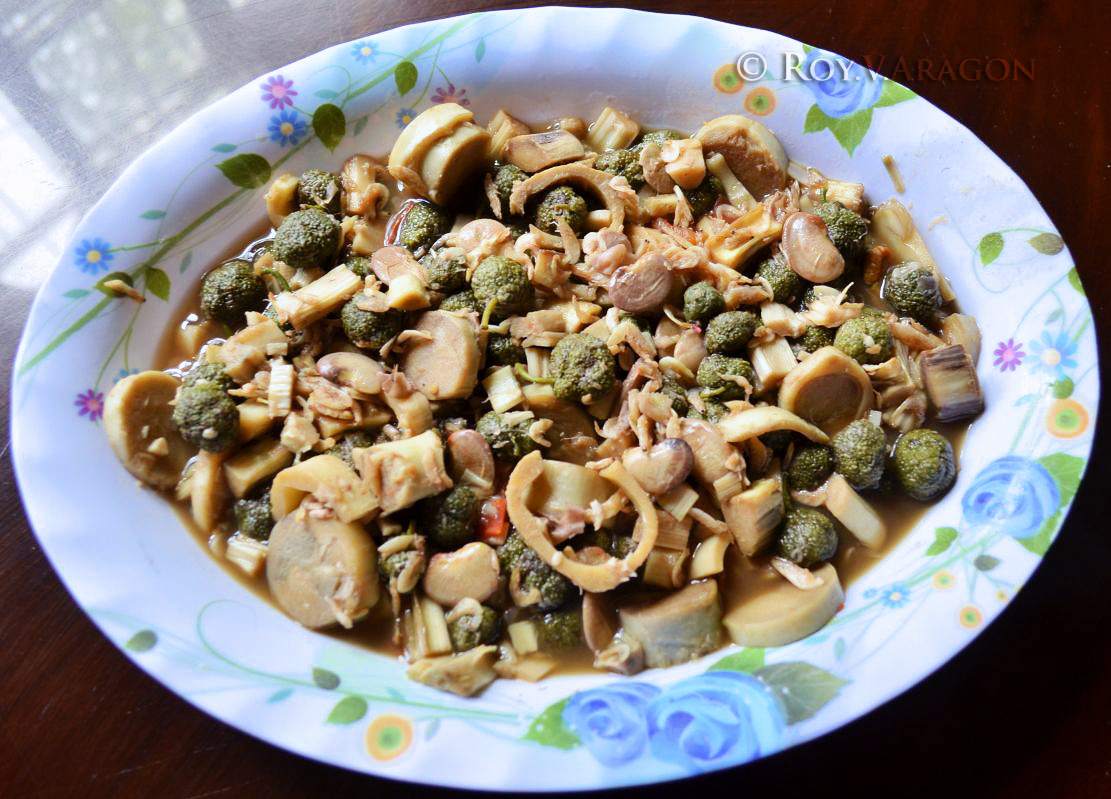
And this is it, my dinengdeng--what a bliss, what a blessing to be able to partake such gastronomic opportunity like this, once more, again, in a lifetime:


:::::







I am not Ilocano by "blood and birth" but this is one of my favorites, we call this "ubod ng uway" in tagalog. Ilocanos in my present hometown call it "bugbog ti uw'way". Very rare nowadays. I love it!
ReplyDeletethe last time i tasted this ulam was way back in 1996, in Dilasag, Aurora Province
ReplyDeleteits been three decades ago when i had my last taste of this delicacy...
ReplyDeleteI was talking to my sister this morning when I remembered about bitter food that I used to love when I was young back in late 1960's, where my late mother brought home Ubod and asked me to help her to prepare for lunch. The bitter was so good to me that I started liking it. My mother frequently include it in our meal until I left for Manila to work. I don't see that here in US since I migrated. I want to look in the market is Ubod when I go back there for vacation. I really miss the tase. I'm ilocano from Isabela Province. Thank you for sharing this view. I enjoy your site.
ReplyDelete